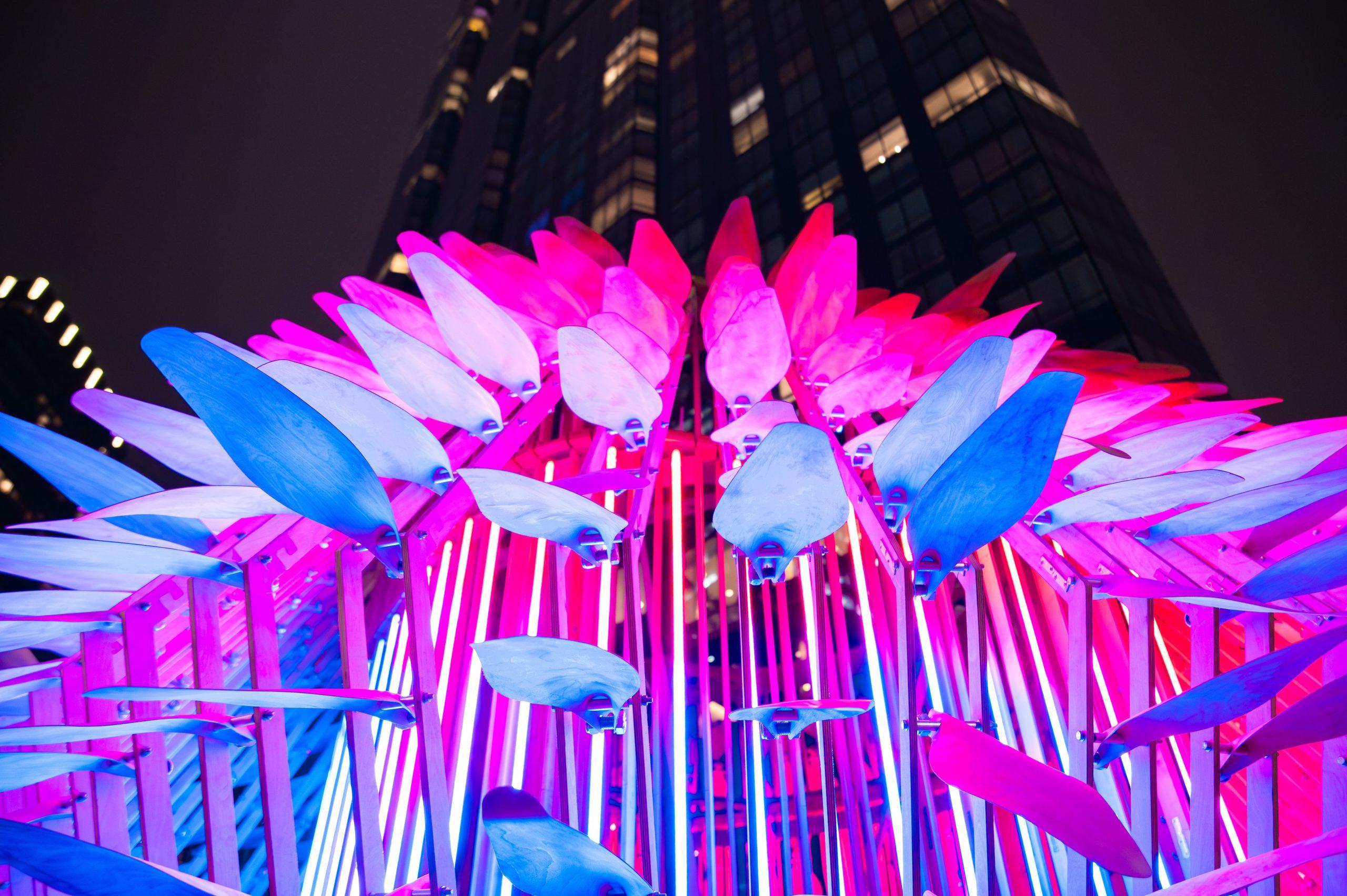
How do you translate the image of a lotus into a physical space without losing its inherent delicacy? Visual artist, architect, and founder of MODULE, Nicolas Paolozzi reflects on the making of Lotus, from the first sketches and 3D modelling tests to the selection of materials and the use of light. He also shares the ideas that shaped the project and his approach to the relationship between an artwork and the place in which it is presented.
The lotus is at the heart of the work. How did you move from the symbol itself to a sculptural form capable of existing at a monumental scale?
The transition from an idea to its physical realization is always a delicate stage. It involved drawing and extensive 3D modelling tests to find a balance between the technical requirements of the structure and the original artistic intention.
How did you work with form, materials, and light to give the flowers their light, delicate, and organic appearance?
The core of my artistic practice is based on a modular and reusable approach to construction. I already had the aluminum tubing that I regularly use in my projects, because of the combination of slenderness, lightness, and durability that this material offers. For this project, the main focus was on exploring how the light from the LED tubes would reflect onto the petals made from a composite textile material. The interaction between these elements creates a soft, diffused light that gives the flowers their delicate and organic appearance.

Lotus transforms a space into a garden of giant flowers. How did you envision the relationship between the work, its environment, and the way visitors would experience it?
From the very beginning, the intention was for this project to be a landscape work composed of a multitude of flowers. I liked the idea of creating a garden that could exist equally well in an urban environment or a natural setting. Like a garden, the work invites visitors to wander among the flowers, or to stop and linger at their feet.
The lotus evokes resilience and renewal. How did these ideas influence your artistic choices and approach to the work?
I imagined this project during the long period of lockdowns brought on by the COVID-19 pandemic. We all experienced this event and waited for a sense of renewal throughout that difficult period. For me, it wasalso a time to question my artistic practice, which had initially focused on very large-scale projects. Lotus became an expression of my exploration of a darker, more poetic type of work, while still allowing for a strong impact within the landscape.
After all the work that goes into designing and fabricating Lotus, what still surprises you when you see it come to life in a real space?
The setting in which the work is presented plays a very important role in how it is experienced, and I love rediscovering the project in very different locations. It is always a pleasure to walk through the installation alongside visitors as they discover the work and to observe their reactions.

What role does the music composed by Baptiste Martineau play in the experience of Lotus, and how does it contribute to creating its atmosphere?
Music is part of all my installations. It is an essential element in immersing visitors in a particular atmosphere. I have been working with Baptiste for a very long time, and he has always understood where I want to take people through my projects. He brings ideas and proposals that, in turn, inform my work with light. The combination of music and light creates a more complete and profound experience, with a much stronger impact on the audience.
Conceived as a garden in motion, Lotus takes on a different dimension in each setting where it is presented. For Nicolas Paolozzi, this relationship with the environment is an integral part of the work: light, form, and the presence of visitors contribute to a different experience each time.
From September 26 to October 24, 2026, Lotus will be presented on the riverwalk at Paddleboat Quarry in Naperville, where its monumental flowers will become part of the landscape and offer visitors a new way of experiencing this iconic site.