What if art display structure could become a true space of wonder? With Bloom, designer and founder Marie-Eve Bourassa envisions a new way of bringing art into everyday life. Designed for cities, festivals, and public spaces, Bloom’s modular installations create places for discovery, contemplation, and connection, where culture naturally becomes part of the public realm. In this interview, she reflects on the vision behind Bloom, its collaboration with Wireframe, and her commitment to making art more accessible, vibrant, and rooted in communities.
How did the collaboration between Bloom and Wireframe begin? What brought your respective visions of public space, art, and cultural experiences together?
It happened very naturally, we immediately developed a great rapport. I was looking for a partner with specific expertise to help bring Bloom’s structures to new destinations. Right away, I recognized Wireframe’s real added value: an ally for artists whose complementary expertise creates a strong synergy, allowing everyone to focus on what they love and do best.
More importantly, we share a common vision that drives us every day: bringing art into people’s everyday paths and creating moments of curiosity. Whatever the artistic medium, our goal is to sparksomething unique, an experience that inspires and resonates with each individual in their own way. We want to offer a poetic pause that naturally becomes part of people’s daily journeys, like an unexpectedgift woven into urban life.
Bloom was born from a desire to rethink the relationship between people, public art, and urban furniture. What inspired the creation of these installations?
From the beginning, the idea was to reinvent the cultural infrastructure found in or near our neighbourhoods, especially suburban communities. I wanted to create year-round artistic display structures with a theatrical, colourful character that would be accessible to everyone.
If parks include fitness equipment and playgrounds, why not create spaces for cultural discovery? I asked myself: what versatile tool could I design to help cities showcase their artists and tell their stories?Too often, neighbourhood parks feature urban furniture focused solely on durability and functionality alongside fascinating public artworks, both historic and contemporary but what bridges the gap betweenthe two? Between comfort and beauty? Between standardization and imagination?
What led you to imagine art beyond traditional exhibition spaces and integrate it directly into people’s everyday lives?
We need to meet people where they are and create projects that are rooted in their communities. I love visiting museums and exhibitions and discovering new worlds, but I wanted to bring that experiencecloser to home.
Where I live, there isn’t a cultural venue within a thirty-minute walk. I wanted to create installations that become places of wonder; living, luminous landmarks in the landscape that are fully customizable and reflect the unique identity of each location.
What role does the public play in the design of Bloom’s pavilions? And how do you hope to evolve this approach to make art accessible in even more places and communities?
The public is at the heart of the design process. What we create has to be meaningful and useful.
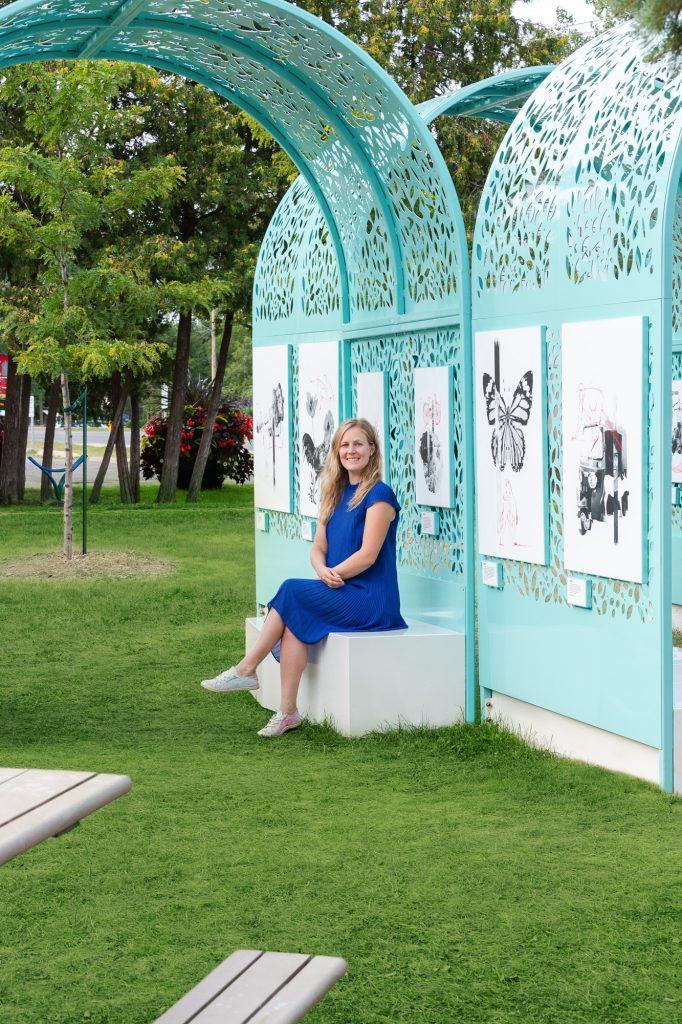
Each arch is a work of art in its own right, designed to engage a broad audience in different ways while responding to a variety of needs and challenges. Shade and light, places to pause, the ability to instantly transform a space, and the opportunity to offer museum-quality content to everyone, at any time these are all part of the vision.
Accessibility, well-being, conviviality, and curiosity are the principles that guide my artistic practice. As we face the challenges of today and tomorrow, I continue to reflect on new ways to create lasting impact through installations that contribute to the quality of life of our communities.
For Marie-Eve Bourassa, public space is much more than a place people simply pass through; it is an opportunity to create connections, spark curiosity, and enrich everyday life. That vision is at the heart of the collaboration between Bloom and Wireframe, united by a shared ambition to create accessible cultural experiences that are thoughtfully designed for the communities they serve.
Through this approach, Bloom transforms urban furniture into true cultural infrastructure. Whether hosting custom content or exhibitions developed with collaborators such as Meryl McMaster and the National Geographic Society, each installation helps turn public spaces into vibrant, inclusive, and memorable destinations. Together, Bloom and Wireframe champion a vision where design, art, and public space come together to create experiences that are accessible, inspiring, and deeply rooted in community life.