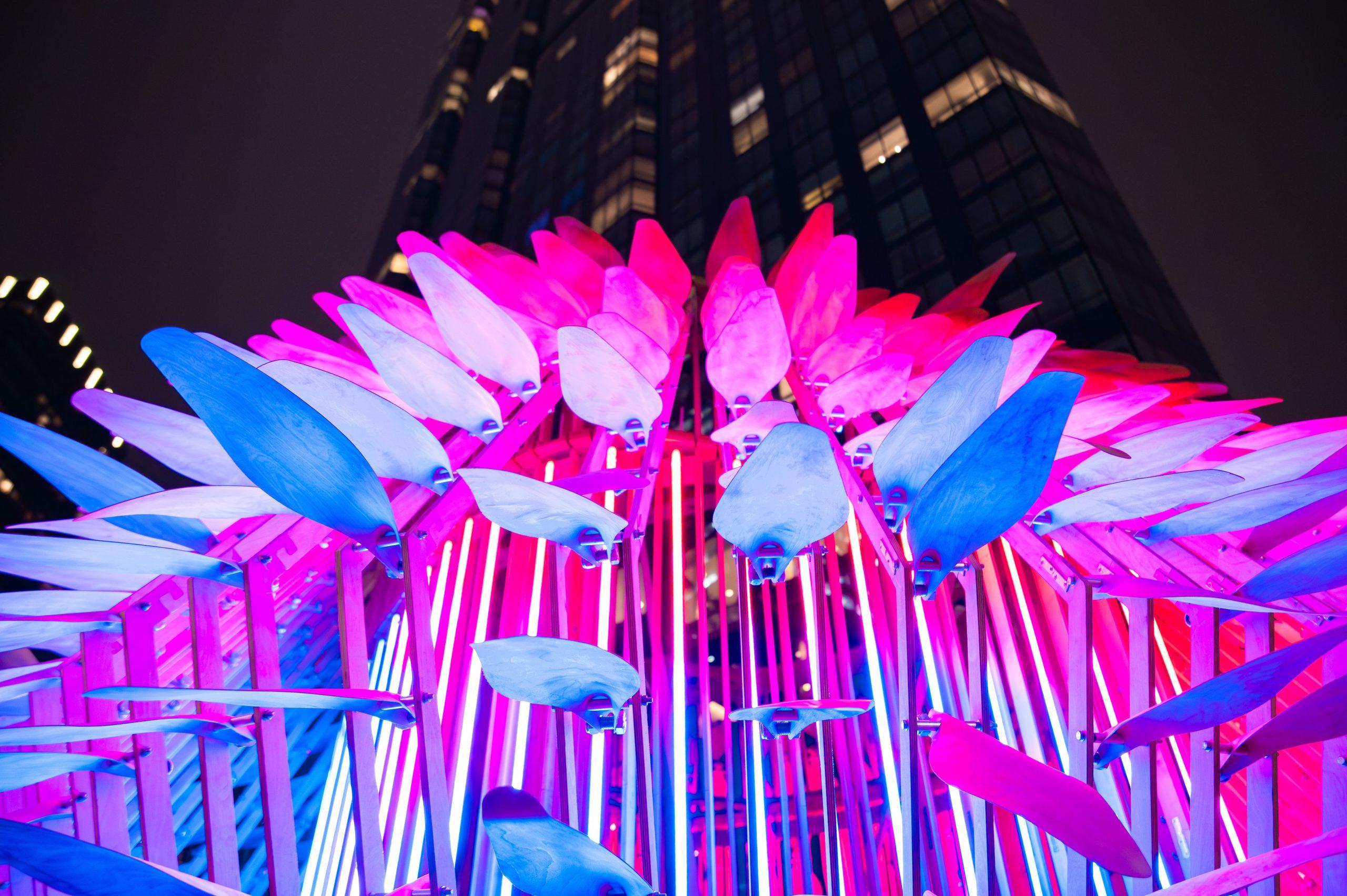
Pavitra Wickramasinghe’s artistic practice creates immersive environments that invite viewers to engage with their surroundings and reflect on relationships between nature, culture, memory, and place. Her work centers on themes of migration, transformation, and the idea of “here” as both a physical and subjective space, often using island imagery as a metaphor for belonging, movement, and interconnectedness. Through installations that employ light, shadow, movement, and multimedia elements, Wickramasinghe foregrounds invisible forces and open-ended narratives, positioning viewers as active participants in shaping meaning around identity, home, and place. Pavitra’s work has been exhibited in numerous local, national and international venues such as Manif d’art – la biennale de Québec (Québec), Chroniques-International digital arts bienniale (France), Musée des beaux-arts de Montréal, OBORO (Montréal), Kunst Kraft Werk (Germany), Yeosu International Art Festival (South Korea), Centre des Arts Enghien-les-Bains (France), Cable Factory (Finland), Centro Cultural del Matadero (Spain) and Access Gallery (Vancouver) among others. She is a recipient of numerous residencies, awards and grants including, Art Omi (NY), La Chambre Blanche (Québec), Pépinières Européennes pour jeunes artistes, (Spain), UNESCO-Aschberg Bursaries for Artists Programme, Changdong Art Studio, National Museum of Contemporary Art (South Korea), Canada Council for the Arts and The Claudine and Stephen Bronfman Fellowship in Contemporary Art.
Since 2010, Pavitra has been a long-time collaborator with artist Amélie Brisson-Darveau. Their joint projects have received funding from the Canada Council for the Arts, the Conseil des arts et des lettres du Québec, the Foundation PHI, and Place des Arts. Their work has been exhibited in Canada, the USA, France, Finland, and Germany.
Pavitra was born in Colombo and lives and works in Montreal/Tio’tia:ke, on the traditional territory of the Kanien’kehá:ka.